How to Export Coconut Shell Charcoal Briquettes for Shisha to the USA
Introduction to the US Shisha Charcoal Market
The demand for premium hookah and shisha products in the United States has experienced exponential growth over the past decade. As lounge culture expands and home consumption rises, hookah enthusiasts are increasingly seeking clean-burning, long-lasting heat sources. Coconut shell charcoal briquettes have emerged as the gold standard for shisha heating due to their odorless, smokeless, and low-ash properties. For international manufacturers and exporters, entering the US market represents a highly lucrative opportunity, provided they understand the regulatory landscape and quality standards required.
Why Coconut Shell Briquettes Are in High Demand
Unlike quick-lite chemical charcoals, natural coconut briquettes offer a superior sensory experience. They do not alter the flavor of the shisha molasses, emit zero sparks, and burn up to three times longer than traditional wood charcoal. This makes them highly cost-effective for commercial hookah lounges and preferred by discerning retail consumers. Premium suppliers, such as Oxicarbon premium charcoal, set the benchmark for high-fixed-carbon, low-volatile-matter briquettes that the US market demands.
Key Specifications for the US Market
American importers and distributors look for specific technical indicators to verify the quality of imported charcoal. Standardizing your product to meet or exceed these parameters is essential for successful market penetration:
| Parameter | Target Specification |
|---|---|
| Fixed Carbon | Minimum 80% - 85% |
| Moisture Content | Maximum 5% - 6% |
| Ash Content | Maximum 2% - 2.5% |
| Ash Color | White or Light Grey |
| Burning Time | 2 to 2.5 hours |
US Customs, Regulatory Compliance, and Documentation
Exporting charcoal to the United States requires strict adherence to safety and customs regulations. Because charcoal is classified as a flammable solid, it is subject to rigorous inspection to ensure it does not pose a self-heating hazard during maritime transit.
- SADT & SHT Tests: Exporters must provide a Self-Heating Test (SHT) report from an accredited laboratory. This certifies that the charcoal is safe for ocean shipping under international maritime rules (IMDG Code).
- Material Safety Data Sheet (MSDS): A comprehensive, up-to-date MSDS is mandatory for customs clearance and carrier approval.
- Vanning Survey: A certificate proving that the container was loaded properly and that the charcoal temperature was within safe limits during packing.
- Customs Bond and ISF: Importers must file an Importer Security Filing (ISF) 24 hours before the vessel departs the origin port, and secure a Customs Bond.
Logistics and Shipping Best Practices
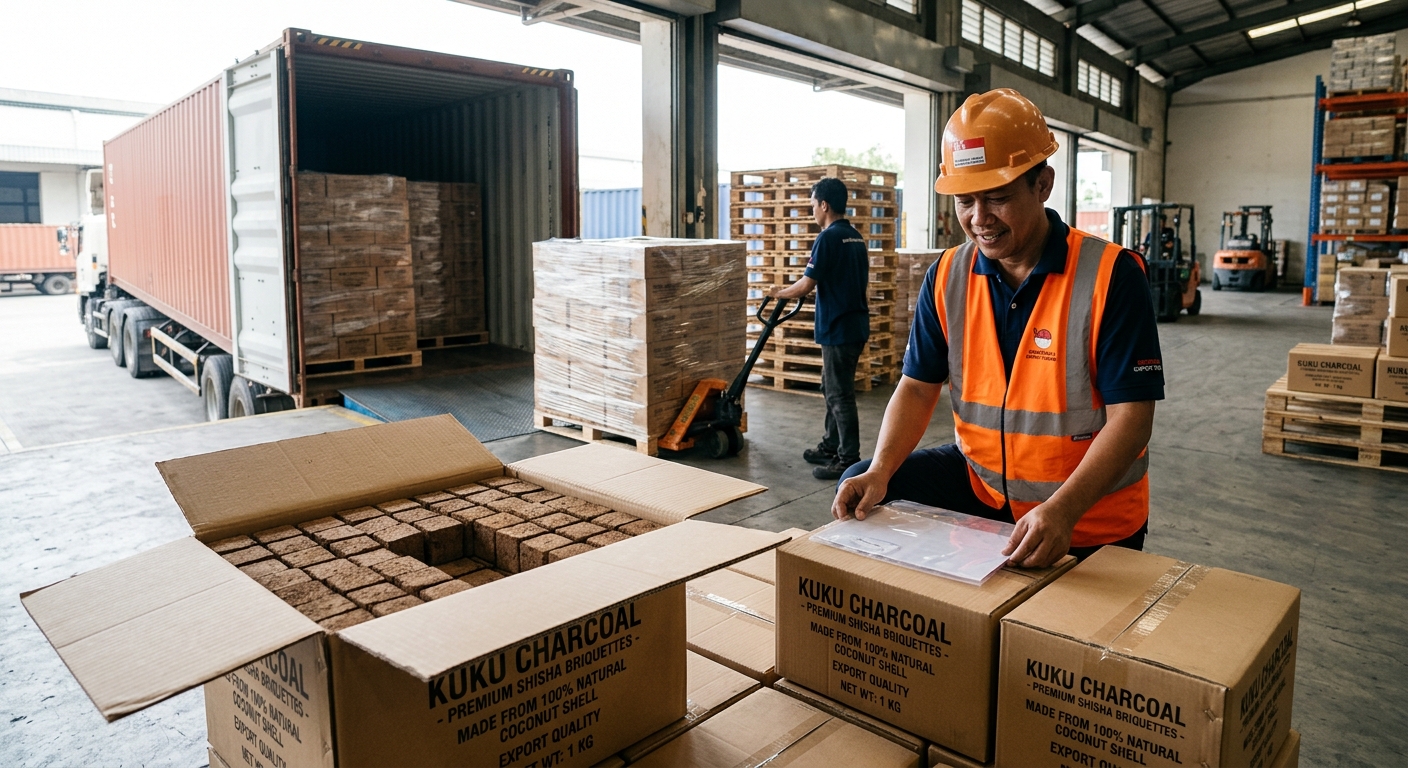
Shipping coconut charcoal is typically classified as hazardous cargo (Class 4.2: Substances liable to spontaneous combustion) unless a certified self-heating test proves otherwise. It is critical to work with freight forwarders who specialize in chemical and hazardous goods shipping to the United States. Ensure your packaging is airtight and moisture-resistant. Standard packaging involves inner plastic wrapping within sturdy, branded double-wall master cartons to prevent physical damage during transit.
Conclusion
Exporting coconut shell briquette shisha charcoal to the United States is a highly profitable venture if managed with a strict commitment to quality and regulatory compliance. By aligning your manufacturing standards with premium specifications, acquiring the necessary safety certifications, and partnering with experienced logistical networks, you can secure a strong foothold in the competitive US hookah market.
Frequently Asked Questions (FAQ)
Is coconut charcoal classified as a hazardous material for shipping?
Yes, in many cases, coconut charcoal is classified under Class 4.2 (Spontaneous Combustible) for maritime shipping. However, if you obtain a certified Self-Heating Test (SHT) showing the product does not self-heat under standard test conditions, it can often be shipped as non-hazardous cargo.
What are the most popular briquette shapes in the USA?
The most popular shapes in the US market are 25mm and 26mm cubes, as well as flat shapes (25x25x15mm) and "Kaloud Lotus" compatible quarter-circle pieces designed for Heat Management Devices (HMDs).
Do I need FDA approval to export shisha charcoal to the US?
No, coconut shell charcoal used for heating shisha does not require FDA approval, as it is not a food, drug, or tobacco product itself. However, it is subject to US Customs and Border Protection (CBP) and Department of Transportation (DOT) regulations regarding hazardous materials.